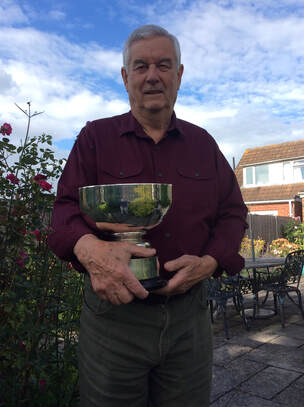
 Chris Harries, a bee farmer from Taunton, is the winner of the greatest honour Somerset Beekeepers’ Association (SBKA) can bestow. He is this year’s recipient of the West Country Honey Farms Award which was given in recognition of his outstanding contribution to beekeeping in the county. Chris has been a member of SBKA for 47 years and has been heavily involved with Taunton & District Beekeepers’ Division based at Heatherton Park. Among many other roles supporting local beekeepers, he is a driving force behind an annual auction of beekeeping equipment, is a honey judge and helps to stage the County Honey Show held as part of Taunton Flower Show. In the 1970s he set up the second crop spray liaison scheme in the country and continues to be the county’s spray liaison officer acting as a go between farmers and beekeepers. Chris was ‘stung’ by the honey bug aged 13 while at Priorswood Secondary Modern School in Taunton (now part of The Taunton Academy) when his woodwork teacher, Harry Harrison, introduced pupils to beekeeping. “He took us out to Heatherton Park apiary to get us to make up frames and clean up the equipment and he also had hives in the school grounds,” said Chris. But his introduction to the craft didn’t get off to the most auspicious of starts: “On the first afternoon, when we were taken to look at the schools’ bees, my best friend was stung and suffered a severe anaphylactic shock.” Chris eventually became a fulltime bee farmer and currently has 300 honey bee colonies in 20 apiaries. “I’ve always had an interest in the natural world – wildlife and plants - and beekeeping combines so many of those interests. And I still enjoy beekeeping all these years on.” Chris’s company, Sedgemoor Honey, produces award-winning, local honey which is sold in outlets across the county and further afield. Somerset Beekeepers’ Association works to advance the craft of apiculture within its membership and to promote general awareness and understanding of honey bees. To find out more visit www.somersetbeekeepers.org.uk Ends 
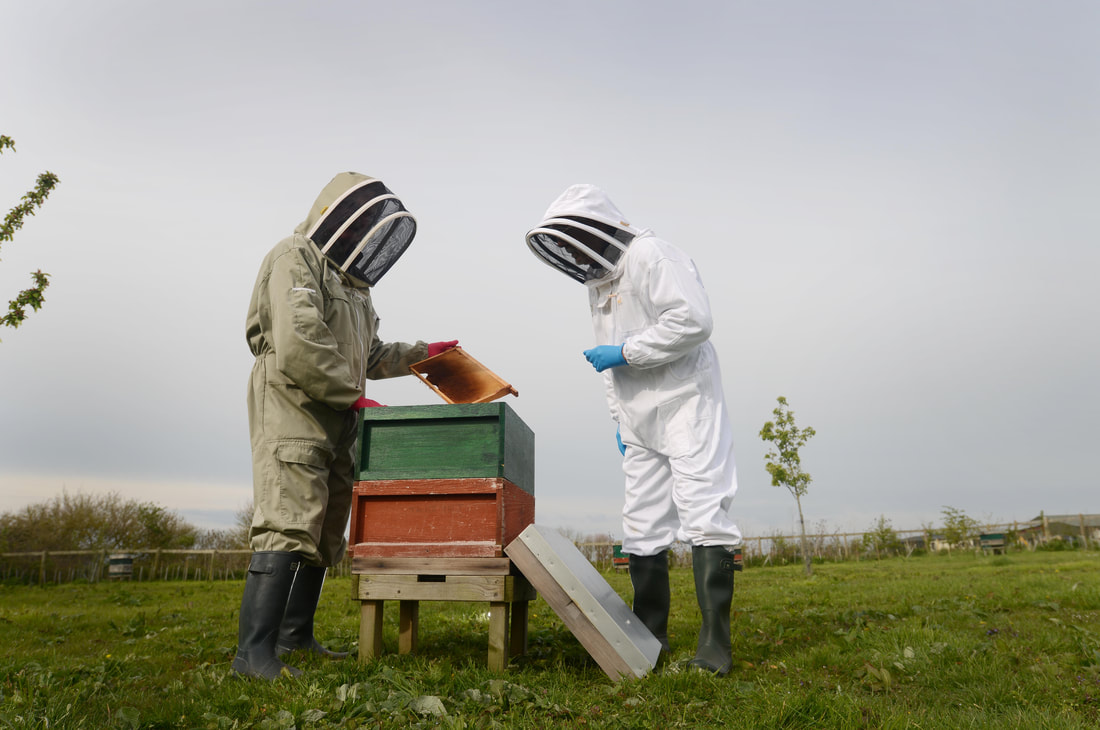 It’s not very often we get good news like this, but here is a real opportunity for somebody who would like to start keeping bees, but is not able to for some reason, or other, writes Stewart Gould, Chairman of Somerset Beekeepers' Association.
Becky Wright, of New Leaf Life Design, which is a company providing workplace and life design coaching has, very generously, donated a large percentage of her fees from sessions with Riverford Foods and Homes in Sedgemoor to Somerset Beekeepers. This money will be used to help somebody, who is contemplating beekeeping, with the start-up costs, but of course, there are conditions. The award will be made to someone who might otherwise find it financially daunting or somebody who has suffered from a situation, not of their making. The lines are purposely blurred so that the award is flexible. Any member who knows somebody who would benefit from this award, should contact their divisional secretary, who can make a bid to SBKA for this money. That bid should be as detailed as possible, giving the good reasons that the person proposed deserves a helping hand. Submissions should be received by Somerset BKA secretary by October 16th, 4 weeks before the November SBKA council meeting. The recipient will have to attend a beginners’ course and be mentored for the first year. Should they give up beekeeping within three years, all equipment purchased using the award must be returned to SBKA. There will be other conditions but this is an award that could make a considerable difference. The fund currently stands at £325.00. The conditions of the award are set out below. These may change slightly, but this is the gist of it at present. Get thinking about who might benefit from this, and get in touch with your secretary. New Leaf Life Design Award conditions: 1. The award will be given to a young person who would, otherwise, find it difficult to finance a start in beekeeping, or somebody considered, by SBKA, to be deserving of assistance in doing so. 2. Nominations from Divisions should be received at least 2 weeks before the September 11th SBKA Council meeting (by Saturday 9th October), so that they can be considered at that meeting. That is by Saturday 28th August. 3. The recipient of the award will attend an SBKA divisional Beginners’ Theory Course during the winter months and a Practical Course during the following season. 4. The recipient will be found suitable equipment from the award, up to the total sum of £325.00. 5. The recipient may apply for more equipment provided it is deemed relevant and within the confines of the award. 6. The recipient will be found a mentor for the first season of beekeeping, and can expect guidance during succeeding years. 7. The recipient will be given a colony of bees, when the mentor is satisfied that it is time to do so. These bees will become the responsibility of the recipient, who must endeavour to keep them well provisioned and managed in a way acceptable to the mentor. 8. Any proceeds from the sale of honey or other hive products will be the recipient’s to spend as they wish. 9. The recipient must become a full member of SBKA 10. The recipient will be expected to sustain a colony of bees and the associated equipment for a period of three years. If the recipient does not wish to continue with beekeeping during that period, all equipment and bees will be returned to SBKA in a reasonable condition. By the same token, all equipment and bees remain the property of SBKA for that three year period. 11. The recipient must take reasonable care and responsibility for any equipment while in his or her care. If it is found that such reasonable care is not being taken, it may become necessary to retrieve the equipment and bees. 12. If the recipient is seen to have renegued on this agreement, all equipment, bees and other goods associated with this award will be forfeit. For the purposes of this document, SBKA refers to Somerset Beekeepers’ Association - registered charity no. 277803 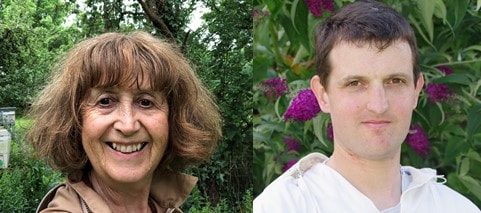 Lynne Ingram and Richard Bache are the only two beekeepers this year to pass the prestigious National Diploma in Beekeeping (NDB) – the UK’s highest qualification in beekeeping.
NDB Chairman Adam Leitch offered his warmest congratulations to them both on their “outstanding achievement”. Candidates follow a broad syllabus ending with an exam, including a theory paper and dissertation, the preparation of botany and entomology portfolios, followed by an all-day practical assessment covering colony handling, botany, anatomy and disease, and a viva voce. Richard, our education officer and who has been a beekeeper for 22 years, confessed to starting the demanding course in a ‘moment of lockdown madness!’ “To be honest, I have absolutely no idea what possessed me!” he said. “But I relished the challenge of taking my beekeeping to the next level: having a more in depth knowledge of beekeeping practice, understanding the place of the honey bee in the broader environment and refining my bee husbandry skills beyond the Master Beekeeper level.” Richard started beekeeping in 1999 following a beginners’ course run by the late Mike Milton and Gerald Fisher of Somerton Division, aged 16. Currently he manages eight colonies. He added: “Beekeeping is a fantastic opportunity to witness and learn about one of nature’s most incredible creations.” Lynne, who heads up our online lecture programme, is our Asian Hornet Action Team coordinator and joint event officer, has been keeping bees for almost 40 years, and currently manages 20 colonies. “For me taking the NDB was the next challenge after becoming a Master Beekeeper. I’ve broadened and deepened my beekeeping knowledge generally, learnt so much more about insects other than honey bees and their role in pollination, as well as studying botany in greater depth, and immersing myself in the latest apicultural research. “It was tough! Lockdown had limited many of the normal training opportunities and added an extra couple of elements to our submissions”. Lynne’s introduction to beekeeping was in the late 1970s when she completed a course run by the late David Charles. “We’d just moved into a new home with some land, and self-sufficiency was very popular so we had goats, sheep and bees. Over the years everything else went but the bees remained - and increased in number.” The NDB started in 1954 and there have been only 94 successful candidates over the intervening years. Somerset Beekeepers’ Association has four members with the qualification – in addition to Richard (Somerton) and Lynne (Taunton), they are Simon Jones (Taunton) and Patrick Rich (Mendip). Lynne: “Beekeeping is absolutely fascinating. You never stop learning however long you’ve been doing it, you meet others who are passionate about bees and your interest can take off in so many different directions.” Richard: “Beekeeping is a fantastic opportunity to witness and learn about one of nature’s most incredible creations.” 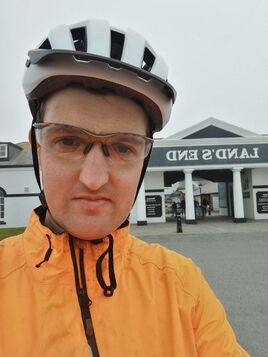 Our education officer and archivist - Richard Bache - is riding from Land's End to John O'Groats for the UNIQUE charity which supports and investigates rare chromosone disrorders.
Richard is well on his way and currently cycling through the highlands of Scotland, having left Land's End 10 days ago. If you'd like to support his fundraising efforts, just click the link: Richard Bache -Land's End to John O'Groats 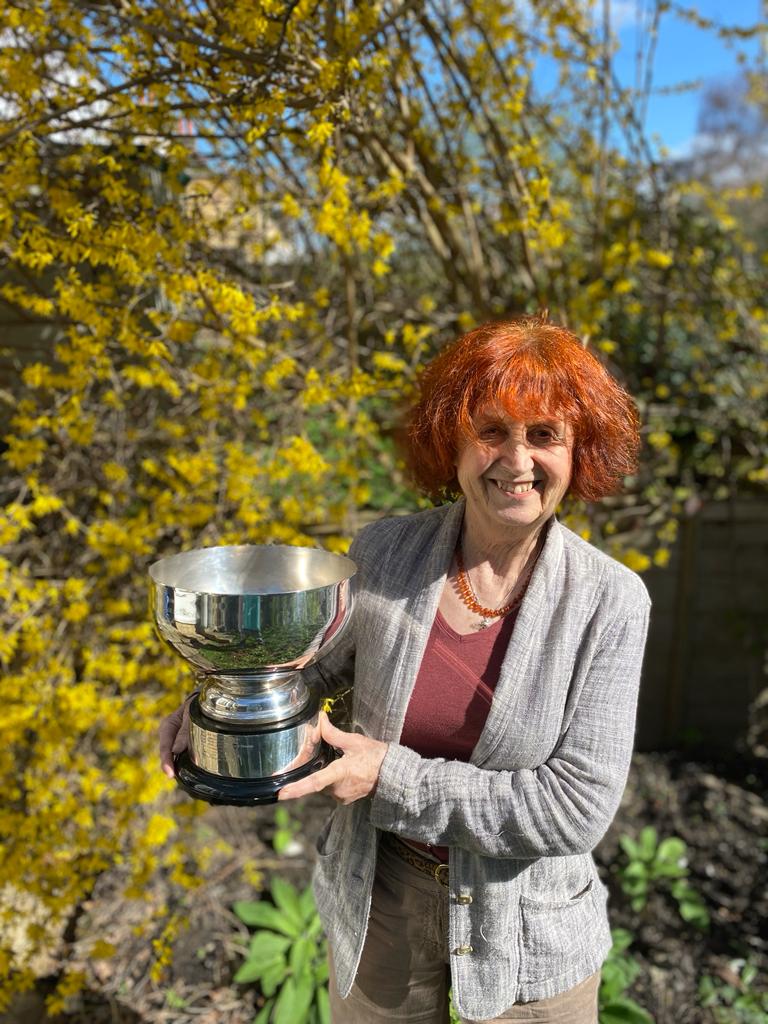 Lynne Ingram MB, Somerset's AHAT coordinator, joint events officer and Zoom pilot is lecturing at the BBKA's online Spring Convention.
Her talk, Know your enemy: Facing the Asian Hornet threat, takes place at 11.45 am on Sunday, April 18. Afterwards she will join Dr Pete Kennedy from Exeter University, who is speaking in the slot before on Asian hornets: A brief overview and new insights, and answer questions live. Lynne has been keeping bees for over 30 years, and currently manages 20 colonies in three apiaries. She has been involved in tracking hornets in Jersey and was a contributor to ‘The Asian Hornet Handbook’ by Sarah Bunker. For tickets and more information about the event, which runs from April 15-18, visit the website. 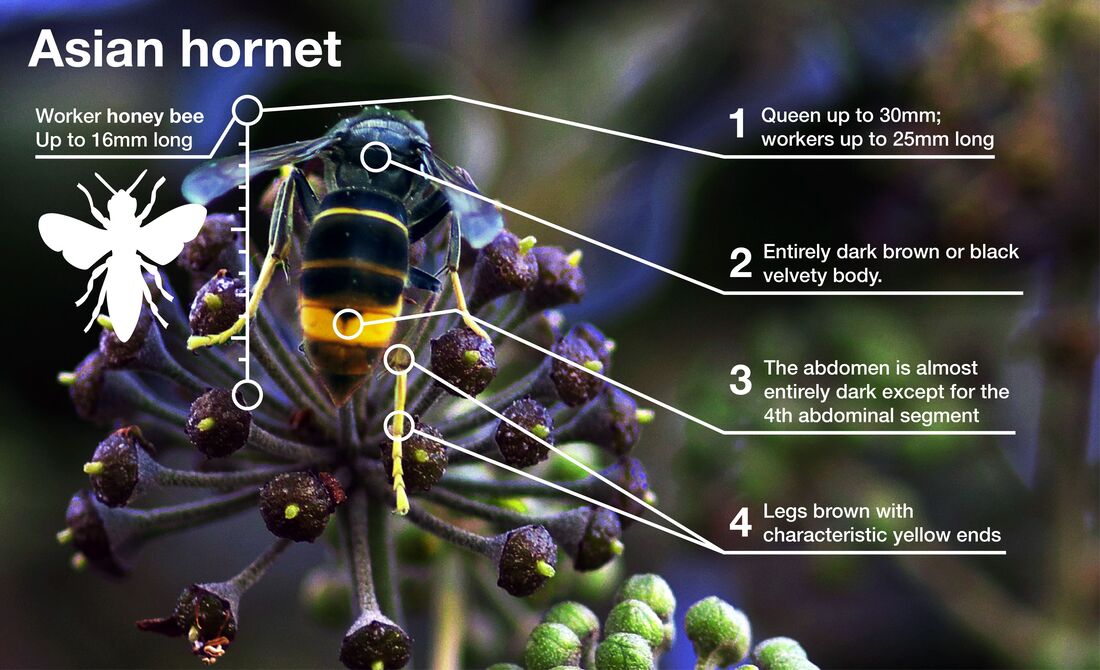 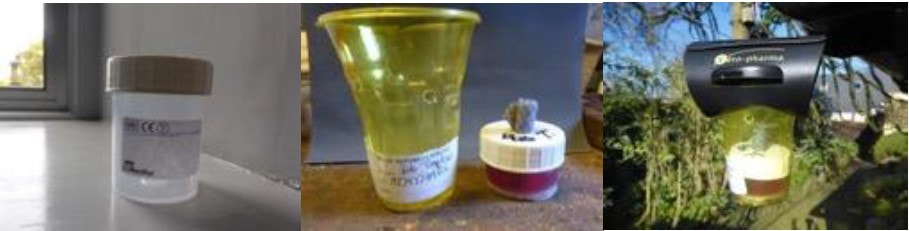 In spring, as temperatures rise, Asian hornet queens (Vespa velutina nigrithorax) emerge from hibernation.
Monitoring now may identify any queens which have overwintered in the UK. Lynne Ingram, MB and Somerset BKA’s AHAT coordinator, recommends the use of monitoring stations rather than killing traps. She says: “This allows us to get the evidence of Asian hornets that we need, without killing our native beneficial insects, in particular European hornets.” At this time of year Asian hornet queens will be searching for sugary foods to build up their energy rather than preying on honey bees. So, all monitoring stations should be positioned where you can easily see them and check them daily - eg outside the kitchen window, or in a sunny spot in your garden. All beneficial insects should be released from monitoring stations daily. From mid-May Asian hornet queens will be mainly in their nests and so monitoring stations can be removed. We suggest the adaptation of Thorne’s traps to include wick stations inside to allow wasps and small flies to escape. Liquid bait - get Suterra (now sold as Trappit wasp attractant) from your AHAT Team leader or buy online. If you can't get it due to current restrictions try one of these French recipes:
If you think you have seen an Asian Hornet:
Jersey is using a modification to the origin design to allow beneficial insects to escape. The wick pot prevents all but the smallest insects from entering from the side. They still require daily monitoring. The trap:
Cut the sample pot to half its height ie 3.5cm and fit the lower section through the top section base first. Place a small block of wood or similar over the top of the pot and tap the two parts together. That way you retain the screw top and the modified pot fits snuggly into the trap. Drill a 12mm hole in the lid to take the wick which is made from paper towelling/Jeyes cloth etc. Fill with your liquid bait. The wick pot prevents all but the smallest insects from getting down the side, and the liquid bait doesn’t evaporate so quickly. The holes in the trap allow beneficial insects to escape. Please monitor regularly. For more information check out our Asian hornet page. And here for resources. 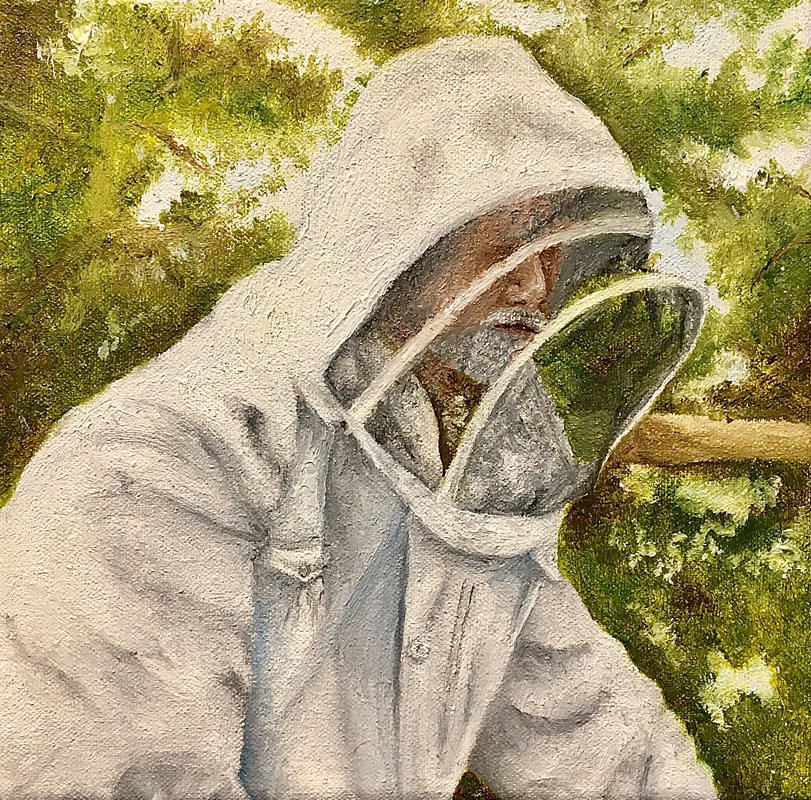 In loving memory of Neil Trood who sadly passed away on January 26, 2021. Neil was a loving husband to the late Jennifer, for almost 60 years. He was the loving father of Rachel, Jeremy and Timothy, and a loving Grandfather and Great Grandfather who will be sadly missed by us all.
Born and brought up in St Augustine Street Taunton, Neil was the only son of Bert and Winifred Trood, he also had a sister, Sandra. Neil went to Priory School and then to Huish’s Grammar School before joining the Somerset County Gazette where he was to work, except for a short break in the 1980s, for his entire career. Neil had a number of roles within this time. National Service in the RAF, especially his time in Singapore and Malaya at the time of the emergency, was also to have a formative influence on him. As a young man, he enjoyed amateur dramatics and took part in many productions by the Taunton Thespian Society, The Taunton Operatic Society, the Liberty Players and Wellington Civic Players. His faith played an important part in his life and he was to be Churchwarden at St George’s Ruishton, St Peter’s Staple Fitzpaine and Holy Trinity Taunton over a period of fifty years. During his time at Ruishton, he directed and stage managed a production of The Passion Play, enlisting members of the community as actors. Neil together with Jenny enjoyed trips to Rome, Spain and the Holy Land. They visited the shrine of our lady of Walsingham several times. In 1978 he took up beekeeping. Enthusiastic as ever he joined Taunton Beekeepers and, over the years, was to serve as Chairman, President, Representative of the division on the committee of Taunton Flower Show, and was County Honey Show Secretary for many years. Neil also represented Taunton on the council of Somerset Beekeepers' Association and the South West Beekeepers' Forum. Latterly he was a Vice President of the Association and in 2000 won the West Country Honey Farms Award for his outstanding contribution to beekeeping in Somerset. Neil and Jenny enjoyed trips to Germany and Ireland with Devon Beekeepers' Association. Neil and Tim's bees produced sufficient honey to require an outlet. Namely the WI shop in Bath Place. Needless to say that Neil got involved with the Country Market, and was chairman for a time, he dutifully worked in the shop every week until the end of December 2019. While there he oversaw the refurbishment of the premises. Neil enjoyed going into Taunton each week, on the bus from Langport. Neil also enjoyed going to Farmers Markets around the county. Neil was initiated into Freemasonry in Richard Huish Lodge No 8518 on 25th November 2000. He served all the progressive offices and in due course became Master of the Lodge on 22nd September 2007. Rather than taking a back seat Neil continued to serve the Lodge and was appointed Master again in 2013. In recognition of his work, he received Provincial honours in 2013, when he was appointed a Past Provincial Junior Grand Deacon. He would have received promotion in the Provincial honours of April 2021. Masonry has many degrees and Orders. As well as being a member of the Craft degree in Richard Huish Lodge, Neil was an excellent Companion on the Royal Arch degree. He was exalted on 28th February 2008 into The Chapter of St George, No 3158. Again, he served off offices and became the First Principal in May 2012 and again in May 2017. He received Provincial honours in this degree also, appointed as Past Provincial Grand Sojourner in 2015 and then promoted in 2019. Neil had also joined Somerset First Principals' Chapter No 3746, in June 2012, just after his appointment as First Principal in The Chapter of St George. Dad got involved wholeheartedly in many things over his lifetime. He did this with a passion to be, and to do, the very best he could in everything, a perfectionist. He spent many hours, ensuring that everything would be perfect on the day. No one thing took over, he always had time for everything he needed to do, sometimes late into the night. We all have our own special memories of him as a father and grandfather. We have been grateful for all the condolences and special memories that his many friends have shared with us at this time. In memory of Neil, we would be grateful for donations towards the bee research project into European Foulbrood (EFB) initiated by Somerset Beekeeping Association. EFB is a bacterial disease that kills the honey bee larvae. A particular strain of this disease is only found in Somerset and North Dorset where beekeepers are finding many cases year upon year with the recommended precautions showing no evidence of reducing the number of cases. Neil kept honey bees since 1978 and has been a mainstay in the running of Somerset Beekeepers Association - having been a past president - and organising the County Honey Show for very many years. He always encouraged beginners and was very keen to promote the importance of honey bees as pollinators. The survival of bees was very close to his heart and it would have been important to him that his memory is playing an important role in the future of the honey bee, particularly in the county where he was born and bred. https://www.justgiving.com/crowdfunding/inmemoryofneiltrood Donations in the form of a cheque will be gratefully received made payable to Crescent Funeral Services. Written by Neil's family. Portrait painted by Neil's grandson Jacob 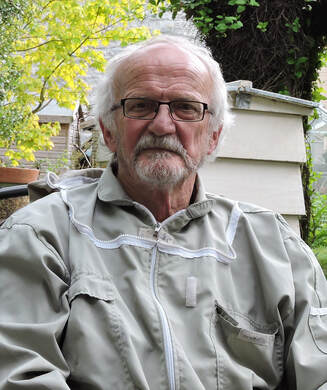 The Chairman of Somerset Beekeepers’ Association, Stewart Gould, is urging beekeepers to keep local honey bees and reject a campaign to overturn the recent ban on bee imports.“Locally bred bees are perfectly adapted for the conditions; imported bees carry the risk of pests and diseases and are genetically better suited to the country of origin,” he said.
His comments follow media coverage of the new Brexit rules which have stopped the importation of honey bee colonies directly into the UK from the EU although queen bees are still allowed. HMRC is aware that there may be attempts to get around the import rules by using Northern Ireland as a back door but anti-avoidance measures are in place. “The importation ban is important and avoids the risk of bringing new problems to the UK’s bees. For example, bees in many areas of the country suffer from Chronic Bee Paralysis Virus which is associated with the importation of bees. And we are worried that the small hive beetle, which is in southern Italy, could come into the country and decimate our bees.” Somerset Beekeepers’ Association runs courses to help members to rear their own queen bees from successful colonies which ensures they are adapted to the conditions in their own area. Patrick Murfet from a beekeeping equipment company in Kent has started a petition calling on the government to reverse the new rules. That petition can be found here Petition to overturn the ban In the interest of even handedness, you should be aware that there is a petition to uphold the ban, which can be found here Petition to uphold the banning of bee imports The number of beekeepers and bee colonies continues to rise in the UK; membership of the British Beekeepers’ Association stands at more than 28,000 while Somerset’s is topping a record 1,200. Stewart Gould, Chairman 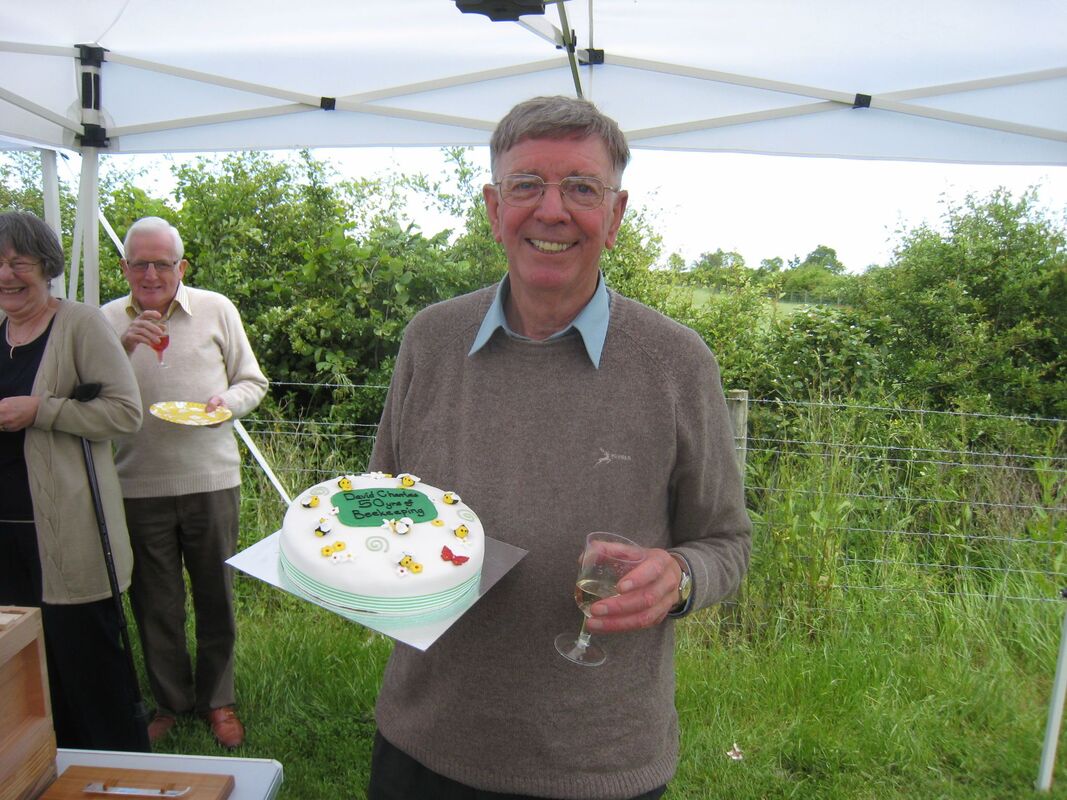 David Charles was one of Somerset BKA's most illustrious members and he will be sorely missed by his many friends in the beekeeping community here and across the UK. His list of achievements is long and distinguished and included serving as President of the BBKA. His beekeeping friendships over the last 60 plus years spanned a who's who of latter day beekeeping giants including LE Snelgrove and Rex Sawyer. He was a passionate beekeeper, communicator and teacher; he launched BBKA News and edited it for several years and wrote for BeeCraft magazine. He twice served as President of Somerset BKA, was a Vice President, a member of Somerton Division and wrote an excellent history of Somerset beekeeping (Somerset Beekeepers and Beekeeping Associations: A History, 1875-2005). He was instrumental in the formation of South West Beekeepers’ Forum (which provides a forum for consultation on matters of concern and interest to beekeepers from across the region). He served two terms as chairman and was one of Somerset’s delegates until very recently. Beekeeping accolades included being awarded the 1972 Wax Chandlers’ prize as the best national candidate in the BBKA exams; he was a Master Beekeeper and BBKA Honorary Member. Throughout his beekeeping career he was a keen supporter of the National Honey Show being, variously, a competitor, committee member, honey judge and, more recently, a supporter and visitor. He was a teacher and on retirement became the county's beekeeper adviser at Cannington. In 2019 David gave up active beekeeping and his final public appearance was in late 2020 when he talked to Anne Pike, former SBKA chairman, in a BeeCraft Cameo video reminiscing about how he started beekeeping. David was very good company, a hugely knowledgeable mentor and a lively contributor on Facebook. David’ funeral was held in St John's Church, Glastonbury on January 15, 2021.  The news this week that Defra has granted a derogation for farmers to use the neonicotinoid thiamethoxam on sugar beet in 2021 has caused uproar amongst many beekeepers and environmentalists.
Somerset BKA Chairman Stewart Gould told the local news: “We know that the intended derogation of neonicotinoid use is for a limited period and is to be used on sugar beet seed, a plant which is harvested before it flowers, and one that doesn’t attract bees, but systemic neonicotinoids, thiomethoxam in this case, are not selective, and are poisonous to all insects, threatening bees and all other pollinators in particular. “ One third of food is dependent on insect pollination and in the UK insects pollinate 70 types of crop – strawberries to cabbages. Dave Goulson – Professor of Biology at the University of Sussex, founder of the Bumblebee Conservation Trust and author of bestselling titles including ‘A Sting in the Tale’ – has responded to the news with a blog. https://www.wcl.org.uk/poisoning-the-environment-to-make-ourselves-ill.asp There is also a debate planned for Tuesday, 19 January https://www.wildlifetrusts.org/events/wild_live_bee-pesticides |
Archives
December 2023
Categories
All
|
||
 RSS Feed

Somerset Beekeepers Association Charity © 2021 Registered CIO Charity 1206483
Affiliated to the British Beekeepers Association
Click here to view our Privacy Policy
Affiliated to the British Beekeepers Association
Click here to view our Privacy Policy